
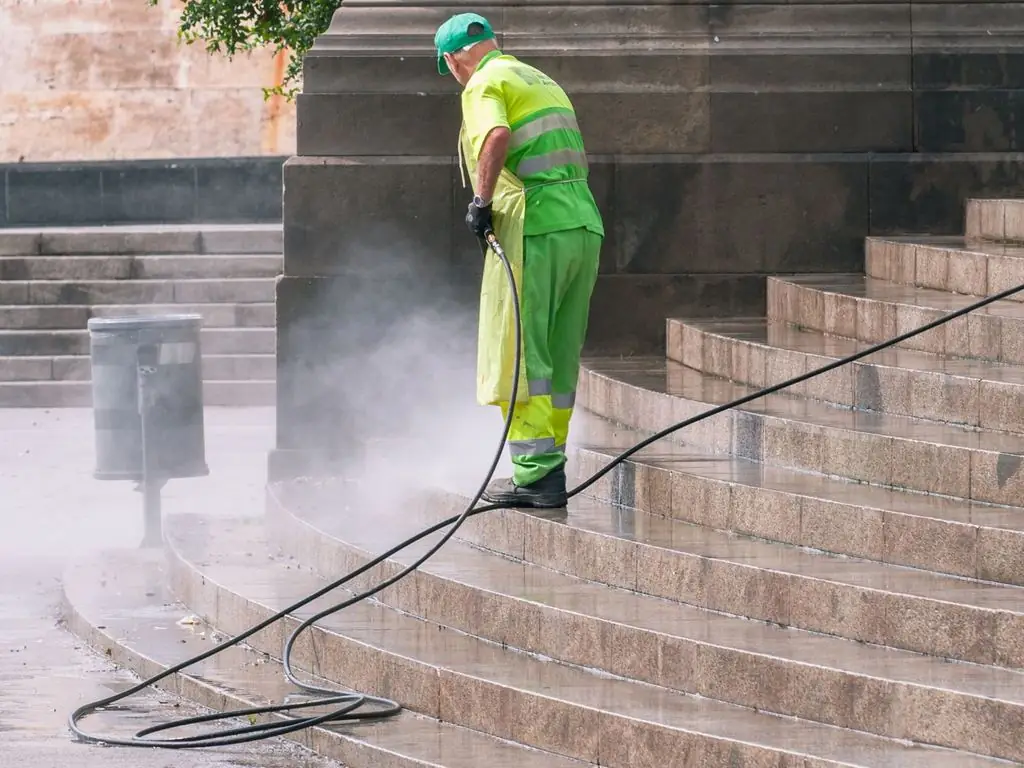
It depends on traffic and use
There’s no single schedule for every property. A quiet office building and a busy restaurant need very different attention. Use these as starting points and adjust after a season.
- Office building entrances, plazas, and walkways: quarterly to twice a year
- Retail and shopping center sidewalks: monthly to quarterly
- Restaurant entries and patios: monthly, or more often in summer
- Dumpster pads and enclosures: monthly for restaurants and grocery; quarterly for most others
- Building facades, awnings, and signs: once or twice a year
What to include in a cleaning
A complete exterior cleaning covers the areas people see and touch first:
- Entrances, vestibules, and walkways
- Sidewalks, curbs, and gum spots
- Dumpster pads, enclosures, and grease spots
- Awnings, canopies, and sign faces
- Stairs, ramps, and plazas
- Graffiti, as soon as it appears
Seasonal timing in the DMV
Spring is the most common time for a deep clean, after winter salt, sand, and pollen. Late summer or fall is a good second visit before leaves and winter weather. Pressure washing needs above-freezing temperatures, so winter cleaning is limited to mild days.
Doing it without disrupting business
Exterior cleaning for commercial properties is usually scheduled early in the morning, in the evening, or on weekends, with walkways cleaned in sections so entrances stay open. Surfaces matter too: concrete, brick, metal, painted surfaces, and fabric awnings each need the right pressure and cleaning method to avoid damage.
Set it and forget it
The easiest approach for property managers is a recurring schedule: a deep clean in spring, regular entry and dumpster-pad cleaning through the year, and spot graffiti removal as needed. One vendor and one schedule keeps the property consistently presentable.
This guide is general information. Code, permit, and accessibility requirements vary by jurisdiction; confirm specifics for your property.